Steel plate weight chart
7.85 kg/m² per mm · 40.8 lb/ft² per inch
Steel plate weighs 7.85 kg per square metre for every millimetre of thickness, or 40.8 lb per square foot for every inch. Use the steel weight calculator for any size.
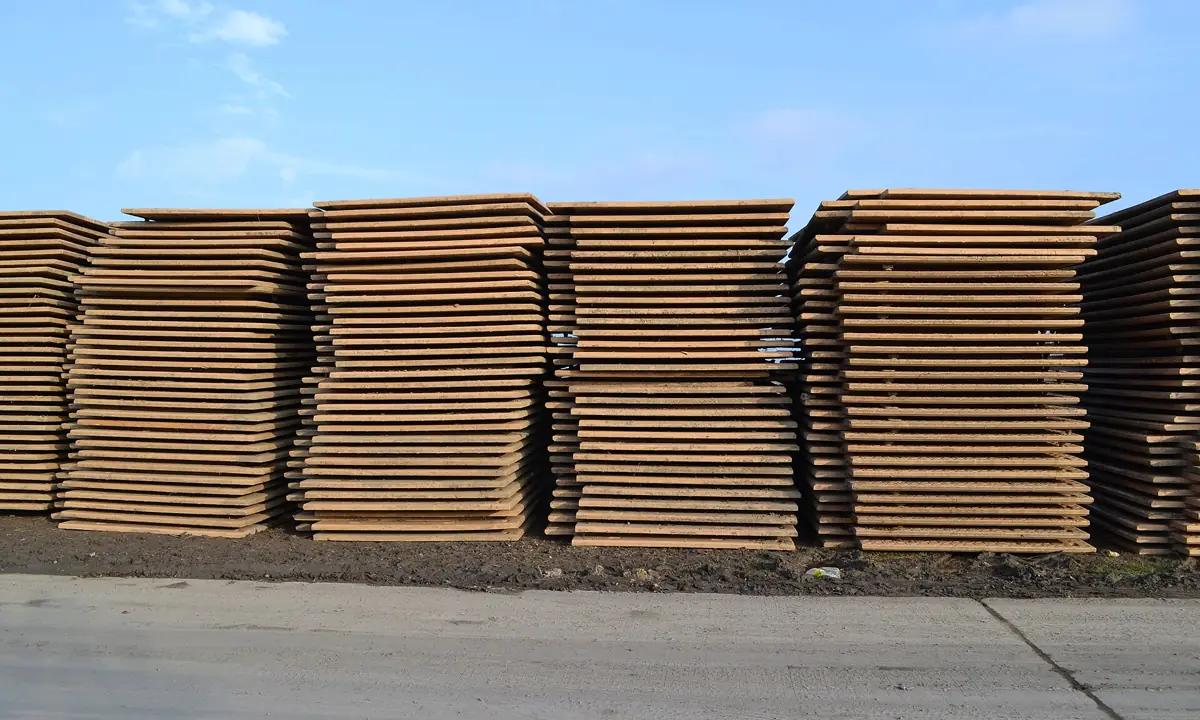
Metric plates
| Thickness | kg/m² | 1250 × 2500 mm (kg) | 1500 × 3000 mm (kg) | 2000 × 6000 mm (kg) |
|---|---|---|---|---|
| 2 mm | 15.70 | 49.1 | 70.6 | 188.4 |
| 3 mm | 23.55 | 73.6 | 106.0 | 282.6 |
| 4 mm | 31.40 | 98.1 | 141.3 | 376.8 |
| 5 mm | 39.25 | 122.7 | 176.6 | 471.0 |
| 6 mm | 47.10 | 147.2 | 212.0 | 565.2 |
| 8 mm | 62.80 | 196.3 | 282.6 | 753.6 |
| 10 mm | 78.50 | 245.3 | 353.3 | 942.0 |
| 12 mm | 94.20 | 294.4 | 423.9 | 1,130.4 |
| 16 mm | 125.60 | 392.5 | 565.2 | 1,507.2 |
| 20 mm | 157.00 | 490.6 | 706.5 | 1,884.0 |
| 25 mm | 196.25 | 613.3 | 883.1 | 2,355.0 |
| 30 mm | 235.50 | 735.9 | 1,059.8 | 2,826.0 |
| 40 mm | 314.00 | 981.3 | 1,413.0 | 3,768.0 |
| 50 mm | 392.50 | 1,226.6 | 1,766.3 | 4,710.0 |
Imperial plates
| Thickness | lb/ft² | 4 × 8 ft (lb) | 5 × 10 ft (lb) | 8 × 20 ft (lb) |
|---|---|---|---|---|
| 1/8 in | 5.10 | 163.4 | 255.2 | 816.8 |
| 3/16 in | 7.66 | 245.0 | 382.9 | 1,225.1 |
| 1/4 in | 10.21 | 326.7 | 510.5 | 1,633.5 |
| 5/16 in | 12.76 | 408.4 | 638.1 | 2,041.9 |
| 3/8 in | 15.31 | 490.1 | 765.7 | 2,450.3 |
| 1/2 in | 20.42 | 653.4 | 1,021.0 | 3,267.1 |
| 5/8 in | 25.52 | 816.8 | 1,276.2 | 4,083.8 |
| 3/4 in | 30.63 | 980.1 | 1,531.4 | 4,900.6 |
| 1 in | 40.84 | 1,306.8 | 2,041.9 | 6,534.1 |
| 1-1/4 in | 51.05 | 1,633.5 | 2,552.4 | 8,167.7 |
| 1-1/2 in | 61.26 | 1,960.2 | 3,062.9 | 9,801.2 |
| 2 in | 81.68 | 2,613.7 | 4,083.8 | 13,068.3 |
Formula
Weight (kg) = thickness (mm) × width (m) × length (m) × 7.85. Weight (lb) = thickness (in) × width (ft) × length (ft) × 40.8.
The 7.85 is the density of steel, 7850 kg/m³: one square metre of 1 mm plate is 0.001 m³ and weighs 7.85 kg. In US units, steel weighs 490 lb/ft³, so one square foot of 1 in plate (1/12 ft³) weighs 40.8 lb.
Example: a 2000 × 6000 mm plate, 12 mm thick, weighs 2 × 6 × 12 × 7.85 = 1130.4 kg. A 5 × 10 ft sheet of 3/8 in plate weighs 5 × 10 × 0.375 × 40.8 = 765 lb.
For a round plate (disc or flange blank), use π ÷ 4 × D² for the area: a 500 mm disc of 10 mm plate weighs 15.41 kg. For a ring, subtract the hole. Cut parts and drilled plates weigh less than the rectangle they were cut from; estimating on the full sheet gives the material to buy.
Plates per tonne
How many sheets of a standard size make up one tonne, useful for ordering and checking deliveries.
| Thickness | 1250 × 2500 mm | 1500 × 3000 mm | 2000 × 6000 mm |
|---|---|---|---|
| 6 mm | 6.8 | 4.7 | 1.8 |
| 8 mm | 5.1 | 3.5 | 1.3 |
| 10 mm | 4.1 | 2.8 | 1.1 |
| 12 mm | 3.4 | 2.4 | 0.9 |
| 16 mm | 2.5 | 1.8 | 0.7 |
| 20 mm | 2.0 | 1.4 | 0.5 |
Plate in other metals
| Material | kg/m² per mm | 10 mm plate (kg/m²) | 1/4 in plate (lb/ft²) |
|---|---|---|---|
| Carbon steel | 7.85 | 78.5 | 10.21 |
| Stainless steel 304 / 316 | 7.93 | 79.3 | 10.31 |
| Aluminum | 2.70 | 27.0 | 3.51 |
| Brass | 8.50 | 85.0 | 11.05 |
| Copper | 8.96 | 89.6 | 11.65 |
Plate, sheet and gauge
Material thinner than about 6 mm (1/4 in) is usually called sheet. In the US it is often specified by gauge, where a higher number means thinner sheet: 10 gauge steel is about 3.4 mm, 16 gauge about 1.5 mm. See the sheet metal gauge chart. For long narrow pieces, the flat bar weight chart lists standard flats. Chequered (tread) plate is specified by its base thickness and weighs a little more than plain plate because of the raised pattern; use the producer's table for it.
Frequently asked questions
What is the weight of a 10 mm steel plate per square metre?
78.5 kg/m²: every millimetre of thickness weighs 7.85 kg per square metre. A 1500 × 3000 mm sheet of 10 mm plate weighs 353.3 kg.
How much does a 4 × 8 sheet of 1/4 inch steel plate weigh?
1/4 in steel plate weighs about 10.2 lb/ft², so a 4 × 8 ft sheet (32 ft²) weighs about 327 lb.
What is the formula for steel plate weight?
Weight (kg) = length (m) × width (m) × thickness (mm) × 7.85. In US units, weight (lb) = length (ft) × width (ft) × thickness (in) × 40.8.
How do I calculate the weight of a round steel plate?
Use the area of the circle: π ÷ 4 × D² × thickness × 7.85, with D in metres and thickness in mm. A 500 mm disc of 10 mm plate weighs 15.41 kg.
What is the difference between steel plate and sheet?
Mostly thickness. Material under about 6 mm (1/4 in) is usually called sheet and is sold by gauge or millimetres; thicker material is plate. The weight per square metre follows the same 7.85 kg per mm rule.
Does stainless steel plate weigh more than carbon steel?
Slightly: stainless 304 and 316 are about 7.93 kg/m² per mm, about 1 % heavier than carbon steel. Aluminum is about a third of the weight of steel, 2.70 kg/m² per mm.
Other weight charts
- ISMB weight chart
- ISMC channel weight chart
- ISWB wide flange beam weight chart
- MS angle (ISA) weight chart
- IPE beam weight chart
- HEA beam weight chart
- HEB beam weight chart
- UPN channel weight chart
- W-shape (wide flange) beam chart
- C and MC channel chart
- Angle iron (L-shape) weight chart
- Pipe schedule chart
- Rebar weight chart
- Sheet metal gauge chart
- MS flat bar weight chart
- MS square pipe / hollow section weight chart
- Square tubing (HSS) weight chart